Innovations in Last-Mile Delivery
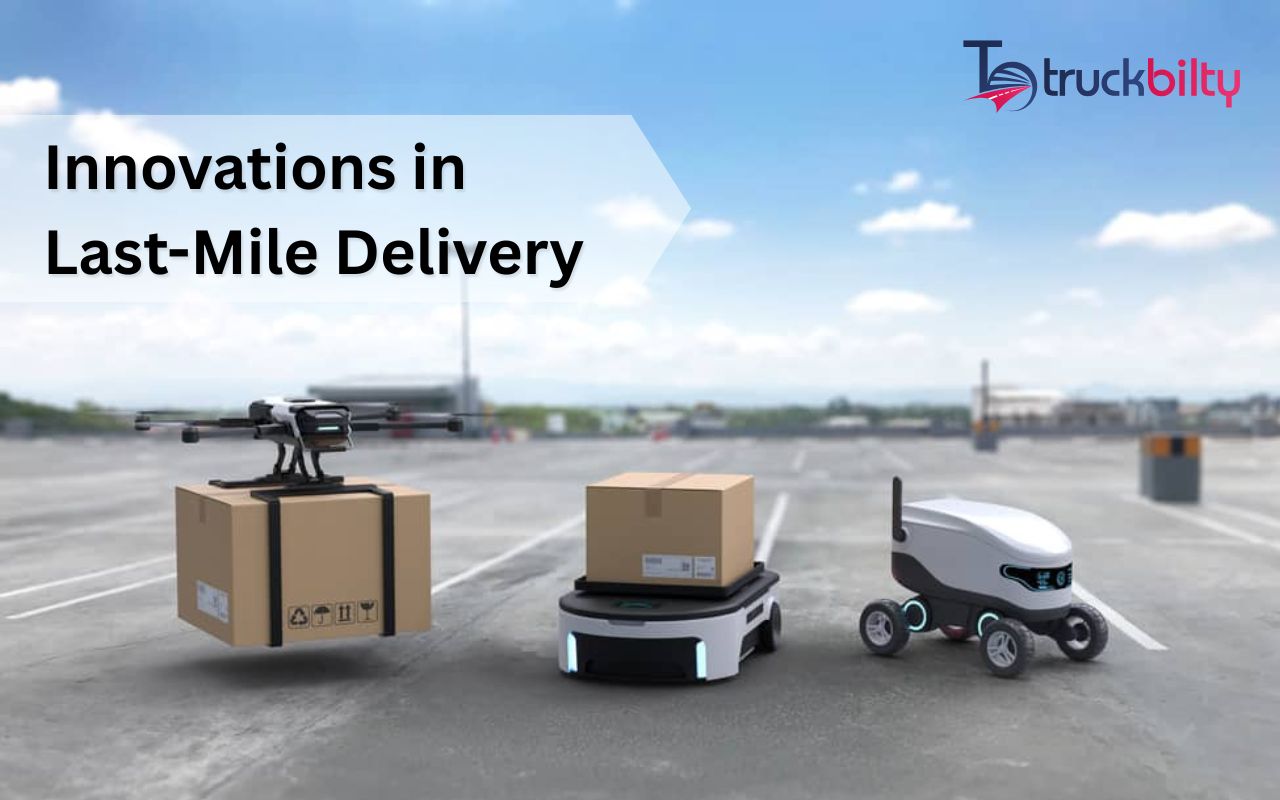
Last-mile delivery is the most expensive part of shipping. See how drones and delivery bots are revolutionizing this final step.
The Last-Mile Challenge
Last-mile delivery—the final leg from distribution center to customer doorstep—represents 40-50% of total shipping costs despite covering the shortest distance. This cost concentration stems from the inherent inefficiencies of residential delivery: low package density, failed deliveries, waiting times, and navigation challenges in complex neighborhoods. E-commerce growth has intensified last-mile pressures, with consumers expecting faster delivery, flexible timing, and often free shipping. Urban congestion adds time and fuel costs while reducing daily delivery capacity. Driver shortages and high turnover rates compound operational challenges. Environmental concerns about delivery vehicle emissions spur demand for sustainable solutions. These pressures have catalyzed remarkable innovation as companies seek to maintain service levels while controlling costs. The resulting solutions range from incremental improvements to transformative technologies that reimagine how final delivery occurs. Understanding and implementing appropriate last-mile innovations has become essential for competitiveness in the modern logistics landscape.
Delivery Drones
Drones can bypass traffic congestion and deliver small packages directly to customers' doorsteps. Unmanned aerial vehicles offer unique advantages for last-mile delivery, particularly in areas where traditional vehicles face challenges. Flight paths ignore road networks and traffic, enabling direct point-to-point delivery. Speed advantages are dramatic for urgent deliveries, with drones potentially completing routes in minutes that take trucks hours. Operational costs per delivery are substantially lower than vehicle-based delivery for suitable packages. Rural and remote areas lacking good road infrastructure become economically serviceable. Drone delivery excels for time-sensitive medical supplies like blood products, vaccines, or emergency medications. Current systems typically handle packages up to 5-10 pounds, covering a significant portion of e-commerce parcels. Regulatory frameworks are gradually accommodating commercial drone operations, with beyond-visual-line-of-sight approvals expanding operational areas. Safety systems including redundant motors, collision avoidance, and controlled landing capabilities address public concerns. Noise reduction technology makes operations less intrusive to communities. Battery technology advances extend range and payload capacity. Weather limitations remain a constraint, as high winds, heavy rain, or low visibility ground operations. Infrastructure requirements include launch/landing pads, maintenance facilities, and air traffic management systems. Scaling drone delivery to mass-market volumes requires solving challenges around fleet management, battery swapping or charging, and regulatory compliance across diverse jurisdictions.
Autonomous Delivery Robots
Sidewalk delivery robots represent an intermediate solution between traditional delivery and flying drones. These small, wheeled vehicles navigate sidewalks autonomously, carrying packages in secure compartments that open via customer smartphone apps. Robots excel in dense urban environments with good sidewalk infrastructure and relatively short delivery distances. Operating costs are minimal—primarily electricity and maintenance—making them economical for low-value shipments where human delivery is uneconomical. Multiple deliveries per route amortize deployment costs across numerous packages. Safety features including cameras, lidar, and conservative speed limits enable operation in pedestrian environments. Remote operators can assist when robots encounter unexpected obstacles or situations. Deployment scalability is high once regulatory approval is obtained, as robots are relatively inexpensive and don't require human operators for routine deliveries. Limitations include payload capacity around 20-30 pounds, vulnerability to theft or vandalism, and weather constraints. Sidewalk infrastructure quality significantly impacts operational efficiency, with poor maintenance or obstacles creating challenges. Public acceptance varies, with some communities embracing the technology while others express concerns about sidewalk congestion or job displacement. Integration with existing delivery networks allows targeted deployment where robots offer maximum advantage.
Micro-Fulfillment Centers
Small, urban warehouses enable faster delivery times by placing inventory closer to consumers. Micro-fulfillment centers (MFCs) represent a strategic approach to last-mile challenges through network design rather than transportation technology. Located in high-demand urban areas, MFCs stock fast-moving items for same-day or next-day delivery. Smaller delivery zones dramatically reduce last-mile distances and costs. Higher package density per route improves efficiency as multiple deliveries concentrate in small areas. Automation within MFCs enables rapid order fulfillment despite compact footprints. Real estate strategies leverage unconventional spaces like parking garages, malls, or multi-story facilities where traditional warehouses are impractical. Inventory algorithms stock MFCs with products likely to be demanded locally based on historical data and predictive analytics. Network optimization determines ideal MFC locations and inventory allocation across facilities. Integration with regional distribution centers enables dynamic inventory transfer to maintain stock levels. The model supports multiple fulfillment modes including home delivery, curbside pickup, and locker networks. Operational challenges include higher real estate costs in urban areas and complexity of managing inventory across numerous small facilities. Labor availability in urban markets can be better or worse than suburban warehouse locations depending on specific markets. MFCs represent significant capital investment requiring careful analysis of demand density and delivery economics to ensure positive returns.
Smart Lockers and Pickup Points
Automated locker systems provide secure, convenient package pickup that reduces delivery costs and failed deliveries. Lockers eliminate the need for drivers to wait for customer availability, dramatically improving productivity. Customers retrieve packages at their convenience, improving satisfaction while reducing redelivery costs. Strategic placement in high-traffic locations like retail stores, transit stations, or apartment complexes maximizes accessibility. Secure storage protects packages from theft or weather damage. Size variety accommodates different package dimensions with automatic assignment during delivery. Electronic access via smartphone apps or pickup codes eliminates physical key management. Integration with e-commerce platforms enables seamless customer selection during checkout. Refrigerated lockers extend the model to grocery and meal delivery services. The locker network creates density that improves route efficiency, with drivers delivering multiple packages to single locations. Retail partnerships provide win-win arrangements where lockers drive foot traffic while providing delivery infrastructure. Capital costs are significant but spread across thousands of deliveries over multi-year timeframes. Maintenance requirements are relatively low compared to complex automation systems. Customer adoption varies demographically, with tech-savvy urban residents embracing lockers while others prefer home delivery. Hybrid strategies offering both lockers and home delivery provide flexibility while optimizing network costs.
Crowdsourced Delivery Platforms
Gig economy platforms leverage flexible labor to provide scalable, on-demand delivery capacity. Crowdsourced delivery transforms fixed costs into variable costs, with companies paying only for completed deliveries rather than maintaining permanent driver pools. Capacity scales flexibly with demand, accommodating peak periods without idle resources during slow times. Geographic coverage expands quickly by recruiting drivers in new markets rather than establishing physical infrastructure. Lower overhead costs from avoided benefits, vehicles, and insurance create economic advantages. Independent contractors using personal vehicles eliminate fleet capital requirements. Technology platforms match available drivers with delivery opportunities in real-time, optimizing utilization. Speed advantages emerge from distributed driver pools already positioned throughout delivery areas. Restaurant and grocery delivery applications demonstrate the model's viability for time-sensitive perishables. Challenges include quality and consistency variability across drivers without standard training and supervision. Customer service issues may arise from limited accountability in contractor relationships. Insurance and liability questions require careful structuring of platform policies and driver requirements. Regulatory scrutiny around worker classification creates potential legal risks. Vehicle condition and professionalism vary more than in traditional delivery fleets. Despite these challenges, crowdsourced delivery fills important niches and continues growing as platforms refine operational models.
Integrating Multiple Last-Mile Solutions
The future of last-mile delivery involves orchestrating multiple delivery modes rather than relying on single solutions. Intelligent routing systems assign deliveries to appropriate methods based on package characteristics, location, urgency, and cost. High-value items go through traditional delivery for security and customer service, while basic packages use lockers or robots. Urgent medical deliveries deploy drones, while bulk grocery orders justify dedicated vehicle trips. Customer preferences inform method selection, with some choosing convenience of home delivery while others prefer locker control over timing. Dynamic optimization continuously adjusts method assignments based on real-time conditions like traffic, weather, or capacity availability. Network design balances infrastructure investment across MFCs, lockers, drone ports, and traditional facilities. Technology platforms provide unified visibility and control across heterogeneous delivery methods. Customer-facing applications present seamless experiences regardless of underlying delivery mode. The integration challenge is significant, requiring sophisticated software, change management, and capital allocation across multiple initiatives. Companies that successfully orchestrate multi-modal last-mile networks will achieve cost and service advantages that single-solution competitors cannot match. The last-mile future is not one technology replacing others, but rather intelligent combination of complementary solutions optimized for specific contexts.